031 เทวีนิรฤติ Nirrti
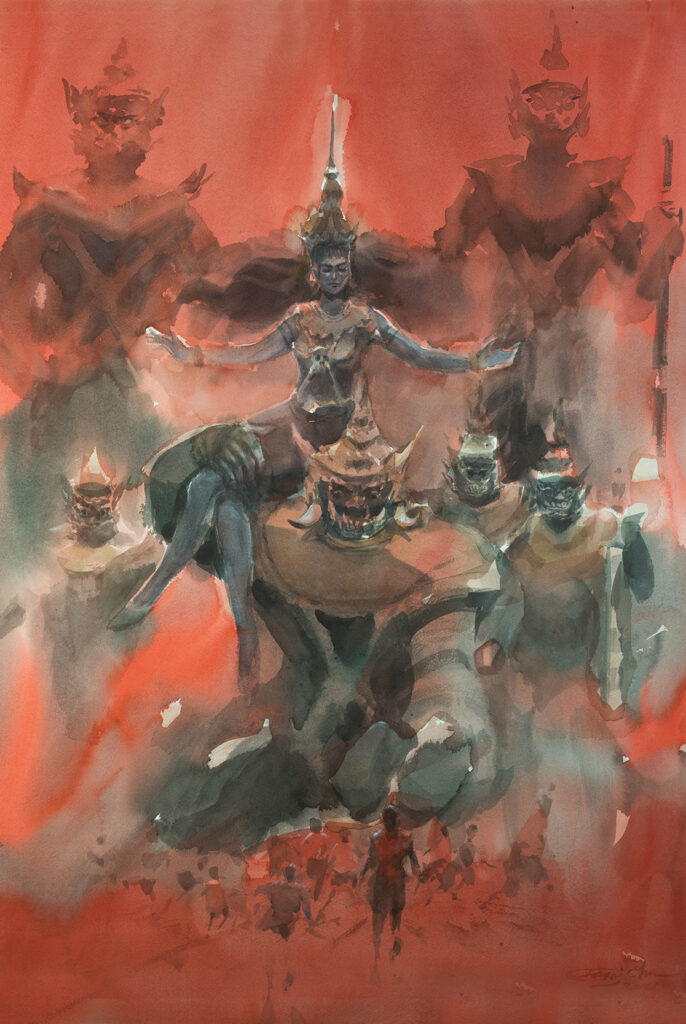
(Original price) : 65,000 Baht
| ผลงานมีจำหน่ายทั้งในรูปเเบบต้นฉบับ เเละ งานพิมพ์ผ้าเเคนวาสคุณภาพสูง The artworks are available in both Original Painting and Premium Canvas print formats. |
 |  |
นิรฤติ เป็นเทพีในคติฮินดูยุคพระเวท (Vedic) ซึ่งเป็นบุคลาธิษฐานของ ความเสื่อมโทรม
ความดับสูญ และความเศร้าหมอง พระนามมีความหมายถึง “การไม่อยู่” หรือ
“ความไร้ระเบียบ” ในคัมภีร์ยุคแรก เชื่อว่าพระนางอาศัยอยู่ใน ดินแดนแห่งความตาย และผู้คนจะสวดขอให้พระนางออกไปจากพิธีกรรมศักดิ์สิทธิ์
เทวีนิรฤติถูกกล่าวถึงว่าเป็น ภรรยาของอธรรม (Adharma) นิรฤติและอธรรมมีบุตรหลายคน
ซึ่งล้วนเป็นบุคลาธิษฐานของความทุกข์ยากและความหายนะ ได้แก่ ภยะ (Bhaya) ความหวาดกลัว มหาภยะ (Mahabhaya) ความหวาดกลัวครั้งใหญ่
อันตกะ (Antaka): จุดสิ้นสุดหรือผู้ทำลาย
(ในบางคัมภีร์ระบุว่าลูกคนหนึ่งของนางคือ มฤตยู (Mṛtyu) ซึ่งเป็นความตาย) บุตรของนิรฤติและอธรรม
รวมถึงพวกลูกหลาน ถูกเรียกรวมกันว่า ไนรรตะ (Nairṛtas) ซึ่งโดยทั่วไปหมายถึงพวกอสูรหรือรากษส (Rākṣasas) ที่อาศัยอยู่ในทิศตะวันตกเฉียงใต้
Nirṛti is a goddess in the Vedic Hindu tradition, personifying decay, dissolution, and sorrow. Her name signifies “absence” or “disorder.” In the earliest scriptures, she was believed to reside in the realm of death, and people would pray for her exclusion from sacred rituals.
Goddess Nirṛti is mentioned as the wife of Adharma, the personification of “unrighteousness” or “sin.”
Nirṛti and Adharma have several children, who are all personifications of suffering and calamity. These include:
Bhaya: Fear.
Mahabhaya: Great Fear.
Antaka: The end or the destroyer (some texts specify one of her children as Mṛtyu, Death).
The children of Nirṛti and Adharma, including their descendants, are collectively known as the Nairṛtas, generally referring to Asuras or Rākṣasas (demonic beings) who reside in the Southwestern direction.