040 อิลลา Ila
(Original price) : Original is 35,000 Baht
| ผลงานมีจำหน่ายทั้งในรูปเเบบต้นฉบับ เเละ งานพิมพ์ผ้าเเคนวาสคุณภาพสูง The artworks are available in both Original Painting and Premium Canvas print formats. |
 |  |
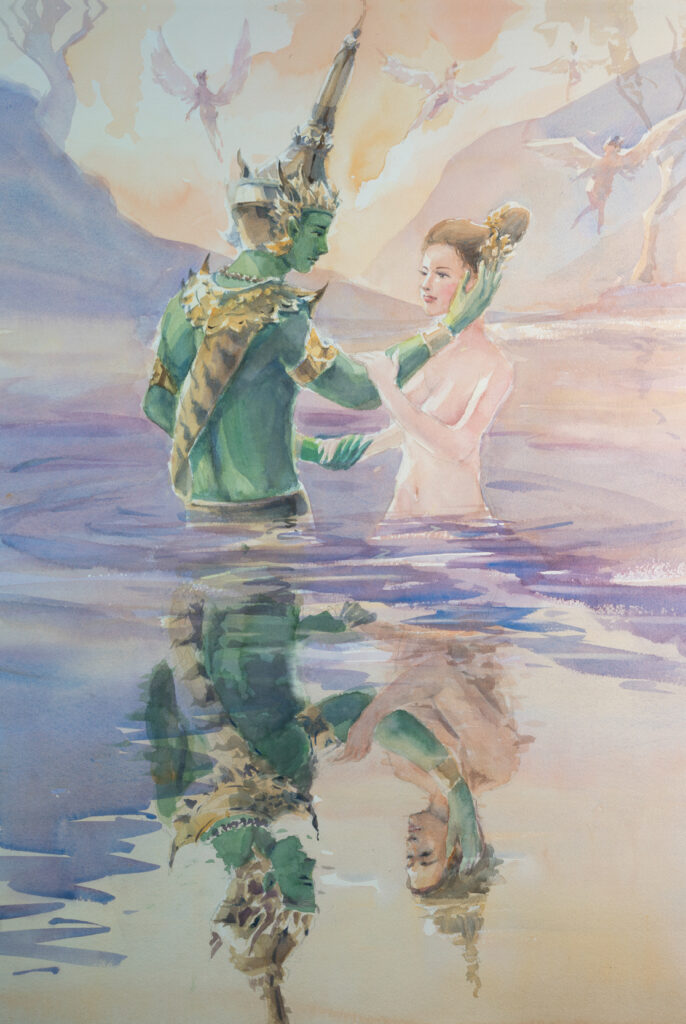
พระนางอิลลาเป็นชายาพระพุธ แต่เดิมคือเจ้าชายอิลลาเป็นกษัตริย์หนุ่มผู้ประสบชะตากรรมแปลกประหลาด เมื่อเผลอเข้าไปในป่าศักดิ์สิทธิ์ของพระศิวะโดยไม่ได้ตั้งใจ อิลลาจึงถูกสาปให้สลับเพศเป็นชายและหญิงในทุกเดือน ชะตานำพาให้เขาเดินทางไปสู่ทะเลสาปที่พระพุธ เทพแห่งสติปัญญานั่งสมาธิอยู่ เมื่อพระพุธพบอิลลาในร่างหญิง ก็เกิดความผูกพันอย่างลึกซึ้งจนทั้งสองตัดสินใจใช้ชีวิตร่วมกัน ความรักนั้นไม่ได้เกิดจากรูปกาย แต่เกิดจากความเข้าใจและจิตใจที่สอดคล้องกัน แม้ชะตาของอิลลาจะไม่มั่นคง แต่พระพุธก็ดูแลและปกป้องอิลลาเสมอ ความสัมพันธ์ครั้งนี้นำไปสู่การกำเนิดปุรุราวัส ผู้จะกลายเป็นบรรพกษัตริย์ผู้ยิ่งใหญ่ของสายราชวงศ์จันทรวงศ์ เรื่องราวของอิลลาและพระพุธจึงไม่ใช่แค่เทพปกรณัมรัก แต่สะท้อนความหมายของตัวตนสองด้าน การยอมรับชะตา และพลังของความรักที่ก้าวข้ามกรอบจำกัดของโลกมนุษย์และเทพเจ้า พระนางอิลลาแสดงถึงความลื่นไหลทางเพศ หรือ LGBTQ+ นอกจากนั้นพระนางเป็นตัวแทนของพลังแห่งคำพูดศักดิ์สิทธิ์ ความสมบูรณ์ ซึ่งเป็นเครื่องมือสำคัญในการประกอบพิธีกรรมบูชา
Ila is the consort of Budha (Mercury). Originally, Prince Ila was a young king who encountered a strange fate. When he accidentally entered the sacred grove of Shiva (Lord Shiva), Ila was cursed to alternate genders, becoming male and female every month.
Fate led him to a lake where Budha, the deity of wisdom, was meditating. When Budha met Ila in her female form, a profound connection developed, and the two decided to live together. Their love was rooted not in physical form, but in mutual understanding and deeply harmonious spirits.
Although Ila’s destiny was precarious, Budha constantly cared for and protected her. Their union resulted in the birth of Pururavas, who would become the great ancestral king of the Chandravamsha (Lunar Dynasty).
The tale of Ila and Budha is thus more than just a divine romance; it reflects the meaning of the duality of identity, the acceptance of destiny, and the power of love that transcends the boundaries of the mortal and divine realms.
Ila is seen as representing gender fluidity or the LGBTQ+ identity. Additionally, she symbolizes the power of sacred speech (Vach) and completeness (Purnata), which are crucial elements in worship rituals.